OUR TREKKING TOURS:
The Shira Route is the longest path to Uhuru Peak, and that is precisely its greatest advantage. More days on the mountain means more time for your body to adjust to the altitude, and the summit success rate here is the highest of any route on Kilimanjaro. For anyone who wants to give themselves the best possible chance of standing on the roof of Africa, this is the route to choose.
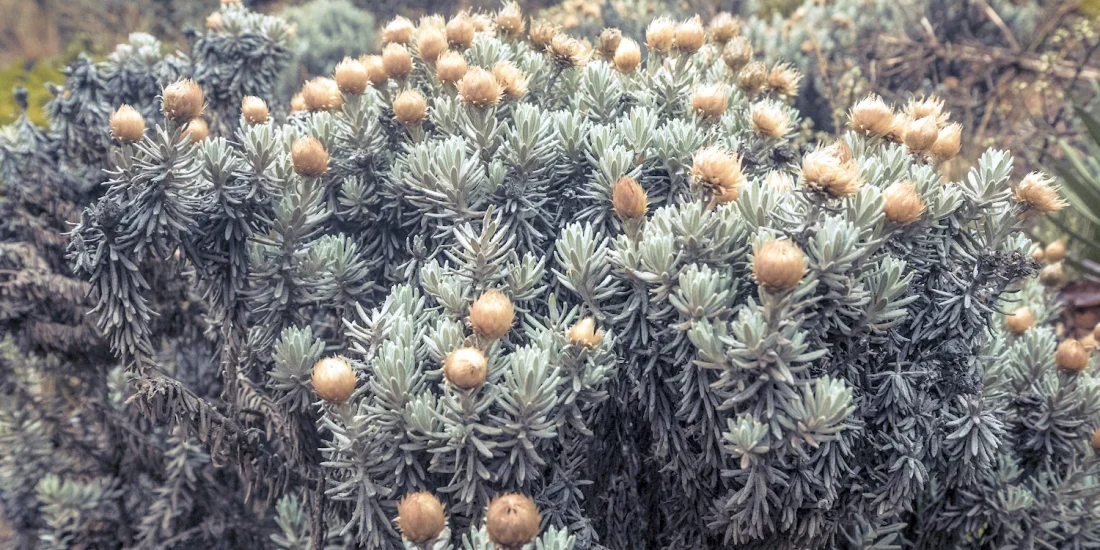
The approach begins at the Londorossi or Lemosho Gate on the western side of the mountain, passing through one of Kilimanjaro’s most intact and wildlife-rich forest zones before opening onto the vast Shira Plateau. Elephants, buffalo, eland, blue monkeys and black and white colobus monkeys inhabit the forest belt, and grey duiker, bushbuck and red duiker appear above the treeline as the vegetation shifts. Higher still, birds are present but the conditions near the summit are too extreme for permanent wildlife habitation. The mountain’s ecological range, from equatorial forest to glaciated peak, is part of what makes this ascent so compelling as an experience beyond the physical challenge.
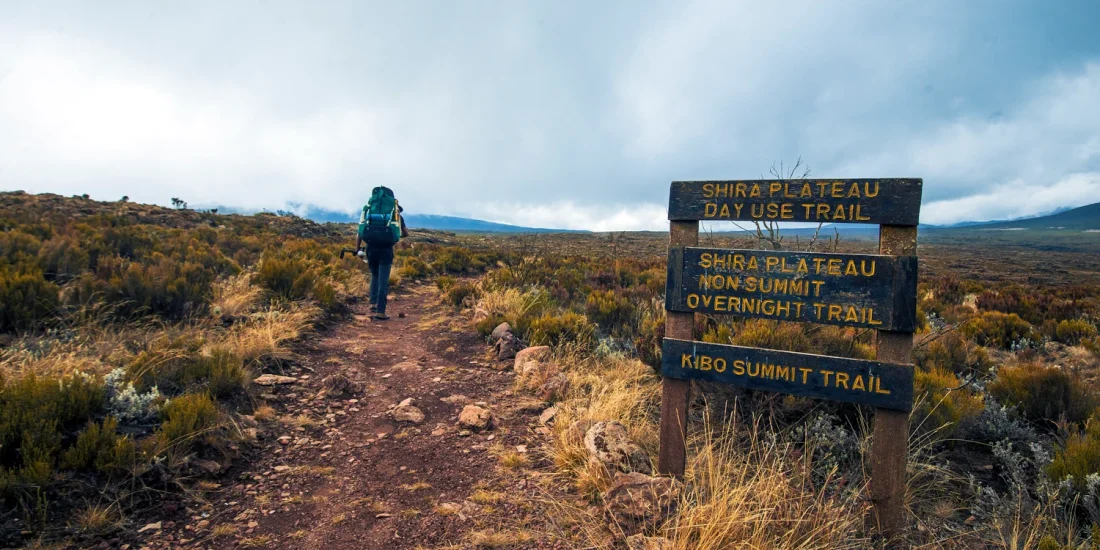
The route we operate connects to the Machame route after Shira Camp, taking the easier line that bypasses the glacier section and requires no specialist climbing equipment. The descent follows the Mweka Route.
An additional acclimatisation day at Karanga Camp is available and recommended. All accommodation is in tents throughout.
This trek can also be combined with a game drive through the West Kilimanjaro savannah, or extended into Tanzania’s Northern Safari Circuit for a fuller Tanzania experience.
Our Trekking Tips, Trekking FAQ, Equipment and Preparation page and Altitude Illness information cover everything you need before setting foot on the mountain. For questions or a quick price quotation, please get in touch.
ITINERARY:
DAY 1: Arusha – Londorossi/Lemosho Gate – Big Tree or Forrest Camp (7km, 4-6 hour walk, 395m/1296ft ascent)
An early departure from Arusha for the transfer to the Londorossi or Lemosho Gate on the western flank of the mountain, where registration is completed and the trek begins. The trail moves immediately into dense montane rainforest, rich with birdsong, filtered light and the sounds of unseen wildlife in the canopy above. The gradient is gentle on this first day, easing you into the rhythm of the climb. Camp is set at Forest Camp, also known as Big Tree Camp, in a clearing among giant trees at around 2,780 metres (9,121 ft). Overnight: Forest Camp
DAY 2: Big Tree or Forrest Camp – Shira 1 Camp (8km, 4-6 hour walk, 1115m/3658ft ascent)
The most significant ascent of the early days. The trail climbs steadily out of the forest, the trees thinning as the path crosses the Shira Ridge and the landscape opens into heath and moorland. The views across the plateau begin to reveal themselves, and the summit of Kibo appears for the first time on the horizon ahead. Shira 1 Camp sits on the edge of the plateau at around 3,500 metres (11,480 ft), and the air here is noticeably thinner than the day before. Overnight: Shira 1 Camp
DAY 3: Shira 1 Camp – Shira 2 Camp (10km, 5-7 hour walk, 400m/1312ft ascent)
A full crossing of the Shira Plateau, one of the most open and atmospheric days on the entire route. The trail passes the dramatic rock formation known as the Shira Cathedral and moves across high moorland with unobstructed views of Kibo ahead and the plateau stretching away on all sides. Shira 2 Camp sits at around 3,840 metres (12,598 ft) and marks the point where the Lemosho and older Shira approaches converge. Picnic lunch on the trail. Overnight: Shira 2 Camp
DAY 4: Shira 2 Camp – Lawa Tower – Barranco Camp (10km, 6-7 hour walk, 110m/361ft ascent)
The path rises from Shira toward the Kibo Dome, passing the junction to the Arrow Glacier before descending into the Barranco Valley. As with Day 3 of the Machame Route, the net altitude gain understates the day: you climb high and sleep lower, a deliberate acclimatisation strategy that the body responds to well. Picnic lunch on the trail. Overnight: Barranco Camp
DAY 5: Barranco Camp – Karanga Camp (4km, 4-6 hour walk, 150m/492ft ascent)
The day begins with the Barranco Wall, a steep and satisfying scramble that delivers you above the valley and onto the ridge beyond. The trail continues through the Karanga Valley to Karanga Camp, where an optional acclimatisation afternoon is available for those on the longer itinerary. A short climb followed by rest is one of the most effective ways to prepare the body for summit night. Overnight: Karanga Camp
DAY 5/6: Karanga Camp – Barafu Hut (4km, 4-6 hour walk, 450m/1476ft ascent)
On the standard itinerary this follows directly from Karanga in the afternoon of Day 5. On the longer itinerary it becomes a full Day 6 departure after breakfast, arriving at Barafu in the early afternoon with time to rest before the summit push. The peaks of both Mawenzi and Kibo are clearly visible from Barafu Hut at 4,673 metres (15,331 ft). Eat, rest and sleep. The alarm comes shortly after midnight. Overnight: Barafu Camp
DAY 6/7: Barafu Hut– Uhuru Peak – Mweka Camp (17km, 10-15 hour walk, 1300m/4265ft ascent, 2800m/9186ft descent)
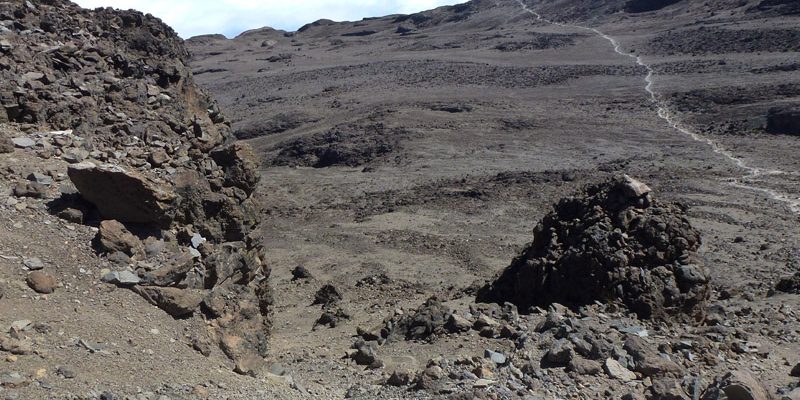
The summit push begins in darkness and cold. The trail climbs through thin air to Stella Point on the crater rim (5,745m / 18,848ft), and from there the final stretch leads along the rim to Uhuru Peak, the highest point on the African continent at 5,895 metres (19,340 ft). Take your time at the top. Then the long descent follows the Mweka Route, dropping through alpine desert and moorland to Mweka Camp by evening. Picnic lunch on the trail. Overnight: Mweka Camp
DAY 7/8: Mweka Camp– Mweka Gate – Arusha (9km, 3-4 hour walk, 1600m/5249ft descent)
The final descent through the forest to Mweka Gate, where the vehicle is waiting. Collect your summit certificate before the transfer back to Arusha. It is yours to keep, and well earned.
End of tour!
Back to main Trekking page