Zanzibar has required Mandatory Inbound Travel Insurance since 1st October 2024, issued by the Zanzibar Insurance Corporation (ZIC). From 1st October 2026, Mainland Tanzania requires it too, issued by the National Insurance Corporation (NIC).
Both policies cover the whole United Republic of Tanzania (URT), so you only need one. Simply buy the policy that matches your first point of entry:
–> Mainland Tanzania Entry:
–> Zanzibar Entry:
Cost: USD 44 per adult; 50% discount for children aged 3 to 17.99 years; 10% discount for groups of 10+ adults; validity up to 92 days nationwide, multiple-entry; renewable
While EAC & SADC citizens are fully exempt under NIC (Mainland Entry); they are not exempt but eligible for a 50% discount (USD 22) under ZIC (Zanzibar Entry).
Please save your insurance certificate and QR code on your phone or print them, as you will be asked to show them when you enter URT and when you travel between the mainland and the Zanzibar islands.
Policies are final, non-refundable and non-transferable, and coverage is limited and mainly applicable to emergencies.
You can claim only under the one inbound policy you bought (ZIC or NIC), or under your own international insurance.
You can purchase the inbound insurance directly from the provider (NIC or ZIC), and we are happy to help if you are unsure which one applies to you.
For the full details, please read the Public Notice issued by the Tanzanian Ministry of Finance, along with additional information about the Mandatory Inbound Travel Insurance for Tanzania.
Important: This mandatory inbound insurance does not replace your own international travel insurance. We still recommend that all guests hold private, comprehensive travel insurance covering the whole world. This is especially important for adventure travel and activities, Kilimanjaro climbs, remote bush safaris and treks etc.
At Pure Afro Travels, complete price transparency is something we take seriously. We want you to know exactly what you are getting before you commit to anything. All prices are quoted in US dollars (US$) per person and, unless your programme states otherwise, include the following:
Before your trip, we will send you a final, personalised programme document for your review and approval. This clearly sets out everything that is and is not included for your specific journey, so please do read it carefully.
A note on VAT: Since 1st July 2016, Tanzanian law requires 18% VAT to be applied to all tourism services, including park fees. We build this fully into your final programme price, so what you see is what you pay. No last-minute additions, no surprises.
What falls outside the price? International and local flights. Tourist Visa to enter Tanzania. Personal expenses such as toiletries, souvenirs, and phone calls; any drinks, meals, transfers or accommodation beyond your itinerary; optional excursions or stop-overs; travel insurance; and tips or gratuities for your crew are not included. We are always happy to advise on budgeting for these.
You might find yourself wondering: how much do I tip the person who just brought my bag to my room? Around US$1 is just right. And what about your safari driver-guide who has been with you from sunrise to sunset, sharing their knowledge, spotting wildlife, and making your day unforgettable? That is a very different story.
Tipping is customary in Tanzania but entirely at your discretion. Think of it simply as a reward for a job well done, nothing more. A practical starting point is to set aside around 5% to 10% of your total tour cost as a gratuities budget. This covers your whole crew comfortably and takes the guesswork out of it.
For larger groups, we encourage everyone to contribute and tip directly to the staff together, rather than funnelling everything through the group leader. It feels more genuine and makes sure the right people are recognised for their efforts.
On Safari: Your private driver-guide is your eyes, ears, and companion throughout the journey, and a tip of US$10 to US$15 per person per day reflects that. The camp crew who quietly keep everything running behind the scenes deserve US$5 to US$10 per person per day. Transfer drivers typically receive around US$5 per person, local city or safari guides US$10 to US$20 per person for a full day (half that for a half day), and hot air balloon pilots, should you be lucky enough to fly, around US$10 per person.
On a Trek (Kilimanjaro, Meru or other): Trekking in Tanzania involves a much larger supporting crew than most guests expect, and this is where thoughtful tipping really matters. Your head mountain guide, who is responsible for your safety and success on the mountain, typically receives US$15 to US$20 per person per day. Assistant guides are usually tipped US$10 to US$15 per person per day, and your porters and cook, who carry extraordinary loads and prepare your meals in demanding conditions, around US$8 to US$10 per person per day each.
We strongly recommend preparing individual envelopes for each crew member before your final day on the mountain. It takes a little organisation, but it ensures that every single person, from your lead guide to the porter you may never have spoken to directly, receives their share personally and with dignity. The supporting crew on a trek is large, hardworking, and often invisible to guests, yet they are the backbone of your entire experience.
Hotels, Lodges and Restaurants: For hotels and restaurants, a tip of 10% to 15% is appreciated, but always check your bill first. In Tanzania, a service charge is often already included in accommodation and meal bills, so you may not need to add anything further. For someone carrying your bag to your room or a waiter who has looked after you well, US$1 to US$2 is a small gesture that goes a long way.
Not sure how to plan your tipping before you travel? Just ask us and we will help you prepare.
Yes, absolutely. We have special rates for larger groups and are happy to put together a tailored quote for you. Since the discount varies depending on the destinations, duration, and type of experience you are looking for, the best next step is simply to get in touch and we will take it from there.
At Pure Afro Travels, all our journeys are tailor-made and designed around you personally. We do not combine strangers into shared group tours, and that is a deliberate choice. A visit to Tanzania is, for most people, a once in a lifetime experience, and we believe real luxury is having that experience entirely on your own terms, in your own time, without compromise.
As a solo traveller you will have your guide, your vehicle, and your itinerary all to yourself. We will design your journey around exactly what you want, whether that is a particular park, a specific trek, a slower pace, or something entirely off the beaten track.
That said, at lodges and camps along the way you will naturally cross paths with other travellers, which many of our solo guests find is a lovely and organic part of the experience.
So why share the magic? Get in touch and let us design something made just for you.
You do. When you combine a safari and a trek with us, we reward that with a discount on your overall package. The exact percentage depends on the destinations, duration, and experiences you choose, so the best way to find out is simply to get in touch and we will put together a personalised quote for you.
Once we have agreed on your programme and price, all necessary reservations will be made and we will ask you for a deposit. This can be paid by bank transfer or credit card. As soon as your deposit is received, a booking confirmation is sent to you by email. Unless otherwise agreed, the remaining balance is due 60 days before your tour begins. Full details are set out in our Terms and Conditions.
Tanzania is gradually moving toward a digital economy, though cash remains widely used. Currency is Tanzanian Shilling (TZS) and all in-country payments (including park fees) are settled in TZS, with the exception of payments made on behalf of non-residents for tourism activities.
Paying while in Tanzania: For any spending money or tips while you are on the ground, there are ATMs and banks in Arusha where you can withdraw local currency (Tanzanian Shillings, TZS) or exchange into US dollars. Debit and credit cards (Visa and Mastercard) are widely accepted at ATMs, though withdrawals are usually limited to around 400,000 TZS (roughly US$150) per transaction. You can make multiple withdrawals depending on your daily card limit.
A couple of things worth knowing before you travel: US dollar notes printed before 2009 are not accepted in Tanzania, so do make sure your cash is current. It is also worth knowing that you will get a better exchange rate for larger denomination notes (US$50 and US$100) compared to smaller ones (US$20 and below), so it pays to carry bigger bills where possible.
Euros (and most other hard currencies) can be exchanged into Tanzanian Shillings (TZS) or US dollars at any bank or bureau de change. However, the exchange rate will be less favourable than for US dollars, as the Euro is not used for any local payments within Tanzania. We recommend arriving with a supply of US dollars wherever possible.
The fastest and most convenient option is to fly. A direct domestic flight from Arusha (or Kilimanjaro International Airport; or even from the Serengeti, if needed) to Zanzibar takes approximately one hour, and we can arrange everything seamlessly as part of your Tanzania itinerary, if needed.
If you prefer an overland-and-sea adventure, a luxury coach from Arusha to Dar es Salaam takes approximately nine hours, followed by a three-hour ferry crossing to Zanzibar. Do be aware that the last ferry from Dar es Salaam departs early in the afternoon, which means an overnight stay in Dar es Salaam is usually required.
VERY IMPORTANT: Zanzibar has required Mandatory Inbound Travel Insurance since 1st October 2024 for all non-residents entering Zanzibar through seaports and airports. As already mentioned above, from 1st October 2026, Mainland Tanzania requires it too; however, both policies cover the whole United Republic of Tanzania (URT), and your first point of entry alone determines which inbound insurance you must buy.
–> Zanzibar Entry:
-> Mainland Tanzania Entry:
Cost: USD 44 per adult; 50% discount for children aged 3 to 17.99 years; 10% discount for groups of 10+ adults; validity up to 92 days nationwide, multiple-entry; renewable
While EAC & SADC citizens are fully exempt under NIC (Mainland Entry); they are not exempt but eligible for a 50% discount (USD 22) under ZIC (Zanzibar Entry).
Coverage is limited and mainly applicable to emergencies.
Note: Inbound insurance must be presented at entry to the URT and when travelling between the mainland and the Zanzibar islands.
Tanzania is a warm, welcoming country, and the vast majority of visitors (including women travelling alone) have a wonderful, trouble-free experience. That said, a few common-sense precautions will help your journey go smoothly:
Above all, do not let anxiety overshadow your experience. The chances of something going wrong are very low. Relax, enjoy yourself, and embrace Tanzania for the extraordinary destination it is.
Not sure which parks to prioritise? Get in touch and we will help you build the perfect Tanzania itinerary.
The use of drones in Tanzania is strictly regulated and requires advance approval from the Tanzanian Ministry of Defence. Without this permit, drones may be confiscated upon entry into the country.
In addition, drones are not permitted in national parks without a separate, park-specific permit. We strongly recommend not travelling with a drone unless all required approvals have been obtained several months in advance.
Tanzania has some of the strictest plastic regulations in East Africa, and visitors are expected to comply:
Single-use plastic water bottles are strictly prohibited on Mount Kilimanjaro. We strongly recommend bringing at least two one-litre reusable water bottles for any trek. Reusable bottles can also be purchased locally in Arusha.
Since 1st June 2019, all plastic carrier bags regardless of thickness are prohibited from being imported, exported, manufactured, sold, stored, supplied, or used in Tanzania. Visitors are advised to remove plastic bags from all luggage (both checked and carry-on) before entering the country. Exceptions apply to plastics used for medical services, industrial products, the construction and agricultural sectors, foodstuffs, and sanitary and waste management.
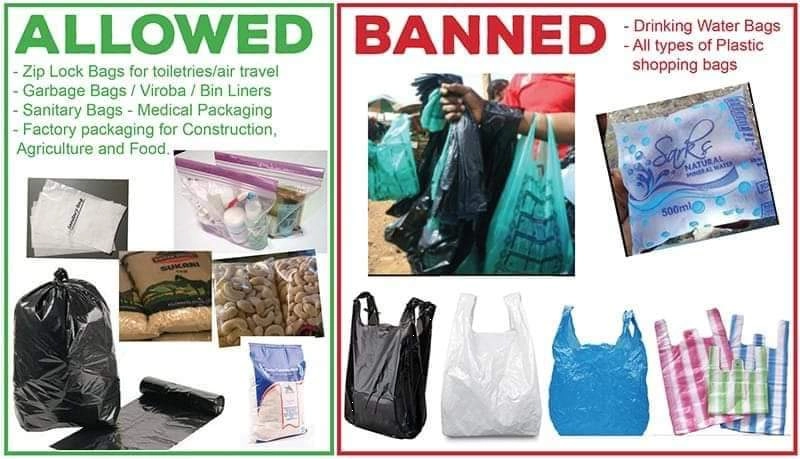
Travelling responsibly is at the heart of everything we do at Pure Afro Travels. Bring a reusable bag and a refillable water bottle, and help us protect Tanzania’s extraordinary natural environment.
The right choice depends on the nature of your journey, and in some cases, the airline.
For lodge safaris combined with coastal travel to Zanzibar, a suitcase is perfectly acceptable. However, if your programme includes light aircraft transfers between bush airstrips, please be aware that luggage allowances are strictly enforced: each passenger is limited to 15 kg total (including hand luggage), and bags must not exceed 58 cm × 33 cm × 25 cm. Soft-sided bags or duffel bags are strongly preferred over hard-shell suitcases for easier loading into small aircraft and safari vehicles.
For camping safaris or any mountain trek (including Kilimanjaro and Meru) a sturdy backpack is the right choice. Note that wheeled suitcases are not permitted on Mount Kilimanjaro.
Always check your specific luggage allowance with us before you travel so there are no surprises at the airstrip.
Yes. Most hotels in Arusha will store your excess luggage free of charge whilst you are out on safari or on the mountain, usually on the condition that you return to the same hotel afterwards. Alternatively, you are welcome to leave any excess items at our office in Arusha. Just let us know in advance and we will arrange it for you.
Packing well for a safari is all about comfort, practicality, and blending into the bush. Here is what we recommend:
Clothing:
Essentials:
Useful extras:
Important: Laundry service is available at most lodges and camps, though not all will launder underwear, so be prepared to hand-wash your smalls.
Rain in Tanzania is rarely the drama people fear. In the Northern Circuit (Serengeti, Ngorongoro, Tarangire, Lake Manyara), the long rainy season (masika) generally runs from mid-March to May, and a shorter season (vuli) arrives for roughly two weeks in November. Contrary to popular belief, it seldom rains all day; showers typically fall in the evenings, overnight, or in the early mornings, and game viewing is usually unaffected.
The green season also has its advantages: fewer visitors, lush landscapes, lower prices, and excellent birdwatching. If you are on a camping safari during the rains, do bring waterproof gear. Safari tents are made from canvas and are designed to be waterproof, but in heavy downpours, keeping valuables in the locked vehicle is sensible precaution.
Please keep in mind that during the longer rains (masika), the majority of lodges and camps in the Southern and Western safari circuits temporarily close for scheduled maintenance and renovations.
Wonderfully close, in many cases … but your driver-guide will always follow Tanzania National Parks (TANAPA) regulations, which require a minimum distance of 25 metres from animals and prohibit off-track driving. However, Tanzania’s wildlife is famously curious and unafraid of vehicles and it is common for lions to rest beside the road, elephants to cross directly in front of your 4×4, or a leopard to drape itself over a branch at eye level.
As thrilling as close encounters are, Tanzania’s parks are not zoos. The animals are entirely wild, and reaching out to touch them is a big NO-NO. Always listen to your guide and respect the wildlife code of conduct; your guide’s experience and judgement are there to keep you safe and to protect the animals.
Yes. All of our safari vehicles are purpose-built 4×4s with pop-up roofs, providing a 360-degree elevated view for excellent game viewing and photography. The open-roof experience is truly one of the highlights of a safari.
For safety and regulatory reasons, pop-up roofs may only be opened inside the national parks and must remain closed while on public roads or outside park areas.
As Tanzania is located close to the Equator, the midday sun can be quite strong, even if the weather is cloudy. We recommend wearing a hat (covering your ears and neck), applying sunscreen, and using a light long-sleeved shirt during peak heat hours. Your guide will also provide helpful guidance throughout the day.
That depends entirely on your itinerary. If you are hoping to visit several parks within a limited timeframe, transfers between them will naturally take longer than on a more leisurely, focused itinerary.
To give you a rough guide: Lake Manyara, Tarangire, and Arusha National Parks are all within one to three hours of Arusha town. The Serengeti and Ngorongoro are more distant, and to do justice to either, we recommend a minimum of four to five days. Please also note that game viewing inside the parks is only permitted during opening hours: 7:00 am to 6:00 pm.
If you are short on time, we can organise a drive-in | fly-out safari, or even a full fly-in | fly-out experience. Contact us to explore the options.
At Pure Afro Travels Tanzania, we believe in complete price transparency, so you know exactly what is included before confirming your booking.
All safari prices are quoted in US dollars (US$) per person and, unless otherwise specified in your programme, generally include:
Your final, personalised itinerary will clearly outline all inclusions and exclusions, so we encourage you to review it carefully before travel.
What is not included: International and domestic flights, Tanzanian visa fees, travel insurance, personal expenses (such as drinks, laundry, souvenirs, and phone calls), optional activities, additional accommodation, meals, drinks, or transfers outside the itinerary, and gratuities for your guide and crew.
VAT notice: In accordance with Tanzanian law, all tourism services are subject to 18% VAT. This is already included in your quoted price, so there are no hidden costs.
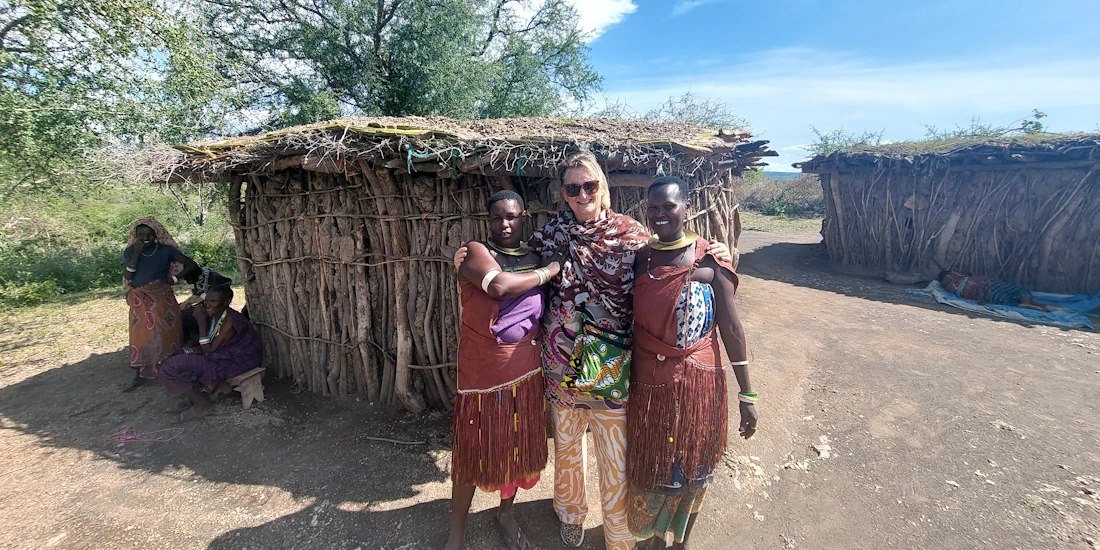
During your safari, you may wish to visit a Maasai village for a cultural experience and photography. Please be aware that an entrance fee is payable, and an additional fee for photographing local people is often requested and can be negotiated on-site.
Visits to Olduvai Gorge or the Laetoli Footprints require advance arrangements, as both must be pre-booked and paid in advance before entering the Ngorongoro Conservation Area.
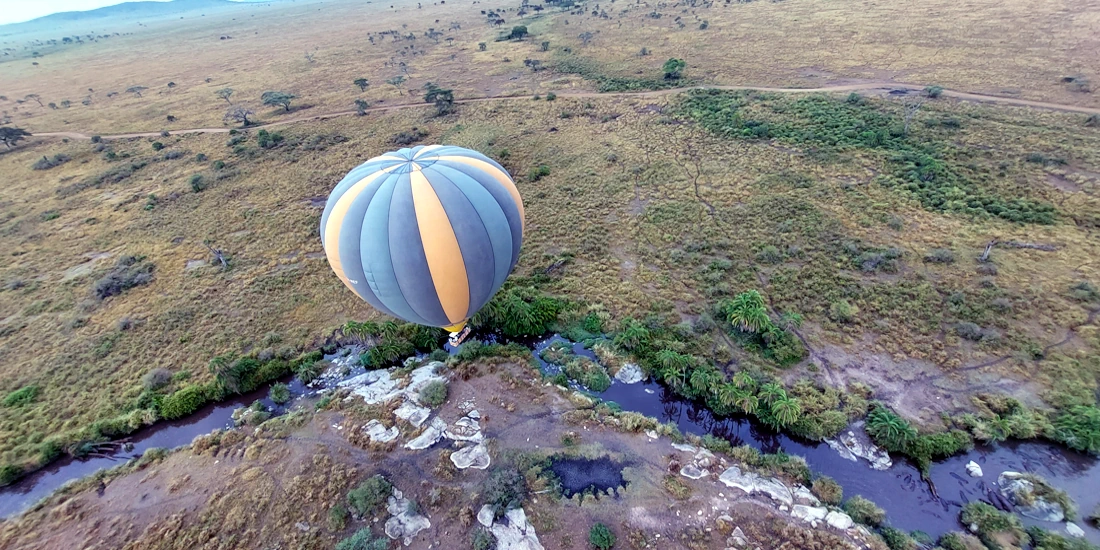
For something truly special, consider a hot-air balloon safari over the Serengeti or Tarangire. Floating silently above the plains at sunrise for approximately one hour, followed by a bush breakfast, this is a magical and unforgettable highlight of any safari.
No. Photography for personal use is entirely free inside Tanzania’s national parks, so bring spare memory cards and batteries, as you will almost certainly need them. Professional television and film crews do, however, need to apply in advance for special filming permits.
When it comes to photographing local people, it is good practice (and basic courtesy) always to ask permission first. In some communities, a small fee may be requested for photographs, and we encourage our guests to respect this.
Certainly. We have prepared special rates for larger groups. Since the discount depends on the tour you have chosen, please contact us for additional information.
Your journey with Pure Afro Travels Tanzania is entirely your own. We specialise in private, tailor-made travel and do not combine guests into shared tours. This ensures a seamless, flexible, and exclusive experience, with your own guide, vehicle, and personalised itinerary throughout.
Absolutely. As a couple, your safari is completely private, giving you the freedom to explore Tanzania on your own terms. It is an ideal setting for a honeymoon or romantic getaway. For a once-in-a-lifetime experience, a dawn hot-air balloon safari over the plains in the Serengeti or Tarangire, followed by a bush breakfast, creates a truly magical moment.
Actually it depends on the tour you have chosen; if you have decided for a lodge or tented camping safari and flying between the mainland and the coast, a suitcase would be acceptable. Please note that some local airlines that operate smaller 13-seater “bush” aircrafts may request soft bags and may limit luggage allowance up to 15kgs only, including hand luggage.
Absolutely, and it is one of the most extraordinary cultural experiences Tanzania has to offer. Some of our pre-arranged safari tours already include a visit to the Hadzabe at Lake Eyasi, but even if you book any safari with us, we can easily add a night and a day to include this remarkable community. It fits naturally into an itinerary after Tarangire, or on the return journey from Ngorongoro and the Serengeti.
A visit to the Hadzabe is genuinely unlike anything else. You can go hunting with one of the world’s last true hunter-gatherer peoples, learn to make fire without matches, try your hand with a bow and arrow, and pick up a few words of their extraordinary click language. It is a humbling, unforgettable encounter.
We can also include a Hadzabe visit as part of our In Search of Volcanoes trekking tour through the Ngorongoro Crater Highlands, where you trek with Maasai warriors and donkeys through the highlands.
Yes, most hotels allow you to leave behind luggage that you won’t need during your safari, provided you return to the same hotel afterward. Alternatively, you can securely store your extra luggage at our Pure Afro Travels office in Arusha until your return.
Tanzania offers an extraordinary range of safari accommodation: from authentic bush camping under the stars to some of the most beautiful lodges and tented camps in Africa.
Your choice will depend on your budget and the type of experience you are looking for. Take a look at our Types of Safari section for more detail, or get in touch and we will guide you.
Packing correctly for a Tanzanian mountain trek is one of the most important things you can do to ensure a safe and enjoyable summit bid. The specific kit list will depend on your chosen mountain and route, but the essentials for any trek include:
Detailed, route-specific packing guidance is provided in our Equipment and Preparation Trekking Tips section. Feel free to ask us for advice before you travel.
Crater Highlands in Ngorongoro Conservation Area: year-round;
Mt. Meru in Arusha National Park: year-round;
Kilimanjaro National Park: year-round.
Not at all. And this is one of the reasons Kilimanjaro is such a remarkable achievement for so many people. There is no technical climbing, no ice axes, and no ropes on the standard routes. If you are in good cardiovascular health (able to run for 30 minutes or more without becoming severely breathless) you have the physical foundation to attempt the summit.
What matters most on Kilimanjaro is patience, acclimatisation, and the right mindset. The mountain demands mental resilience and a willingness to go slowly.
Please note: anyone with a persistent cough, cold, or respiratory difficulty should stay below 3,000 m. Those with cardiac, pulmonary, or blood pressure conditions, or who are undergoing medical treatment, should consult their doctor before attempting any high-altitude trek.
Altitude illness (also known as Acute Mountain Sickness, AMS) is caused by the lack of oxygen in the thin mountain air and it can effect anyone, regardless of age or physical condition in altitudes above 1.500 m (5.000 ft).
High altitude is considered to be between 1.500-3.500 m (5.000-11.500 ft), very high altitude between 3.500-5.500 m (11.500-18.000 ft), and extreme altitude above 5.500 m (18.000 ft).
When ascending through the atmosphere, barometric pressure decreases (though the air still contains 21% oxygen) and every breath contains fewer and fewer molecules of oxygen. Body must work harder to obtain oxygen, primarily by breathing faster. As the amount of oxygen in the lungs decreases, the blood becomes less and less efficient at acquiring and transporting oxygen, meaning that no matter how fast you breath, attaining normal blood levels of oxygen is not possible at high altitude.
The major cause of altitude illnesses is going too high too fast. Given time, your body can adapt to the decrease in oxygen molecules at a specific altitude. This process is known as acclimatization and generally takes 1-3 days at that altitude.
A headache, and any one or more of the following symptoms above 2.500 m (8.000 ft) qualifies you for the diagnosis of AMS: Loss of appetite, nausea, or vomiting; Fatigue or weakness; Dizziness or light-headedness; Difficulty sleeping; Confusion; Staggering gait. If you experience any of these, tell your guide immediately.
VERY IMPORTANT: Please treat the following as educational guidance only and consult your own physician before your trek, particularly regarding medications!
Altitude illnesses can be prevented by a proper acclimatisation and preventive medications.
A) PROPER ACCLIMATISATION
B) PREVENTIVE MEDICATIONS – DIAMOX
(Acetazolamide) is a prescription drug which allows you to breathe faster in order to metabolize more oxygen, thereby minimizing the symptoms caused by poor oxygenation.
Since it takes a while for Diamox to have an effect, it is advisable to start taking it 24 hours before you go to altitude (125 mg twice a day; morning and night) and continue for at least five days at higher altitude.
Possible side effects include tingling of the lips and finger tips, blurring of vision, and alteration of taste.
As Diamox is a sulfonamide drug, people who are allergic to sulfa drugs should not take it!
Diamox has also been known to cause severe allergic reactions to people with no previous history of Diamox or sulfa allergies. A TRIAL COURSE of the drug BEFORE GOING TO A REMOTE LOCATION where a severe allergic reaction could prove difficult to treat IS A MUST!!!
According to Kilimanjaro National Park Authorities (KINAPA), the minimum permitted age for trekking to Uhuru Peak is 12 years old. For younger children, there are wonderful lower-altitude routes and viewpoints within the national park that can be enjoyed as day walks, without the risks associated with high altitude. Please speak to us and we will design the right experience for your family.
We highly recommend the longer 7+ day routes (Lemosho / Shira / Machame) allowing your body to acclimatise naturally; and as long as the Arrow Glacier shortcut is avoided. Do note that on those routes overnight is possible only in tents! For those who want to have the comfort of sleeping in the huts, the Marangu route is the only option.
Lemosho and Shira route join Machame Route at Shira platoe. Machame route is also known as the »Whisky route« and if you choose it, you will see much more of the mountain, as you are ascending from Machame Village to the Uhuru peak and then descending to Mweka Village. You will see much more of the landscape, and acclimatization is done while you are walking (you will be trekking through Karanga Valley and gaining minimal height while keeping yourself active and enjoying the scenery).
The most popular, and sometimes quite crowded, the Marangu Route is also known as the »Coca Cola route«. Choosing this route, you will be ascending and descending on the same path and acclimatization is usually done by one-day resting in the huts.
The trek to the Uhuru peak is hard on any route, but the advantage of the Machame Route is that it is less steep compared to Marangu Route, and most people spend less time on the final ascend walking to the the peak than on Marangu.
Kilimanjaro is so huge that it generates its own microclimate; and the saying that climbing it is like walking from the Equator to the North Pole is not far wrong. From the warm, dry plains at the base (average 30°C), you ascend through lush equatorial rainforest, moorland, alpine desert, and finally the glacier zone at the summit.
At the Uhuru Peak (5,895 m), temperatures can plunge to as low as −25°C, with wind chill making conditions feel even harsher. The upper mountain is cold, dry, and demanding, which is why packing proper layering is non-negotiable.
Unsure what to bring? Our detailed packing list is available in the Trekking Tips section, and we are always happy to advise.
The size of your support crew depends on the number of people in your group and the route chosen, but as a rough guide, expect a ratio of three to five crew members for each trekker (the ratio is typically higher for smaller groups and lower for larger ones). Your team will always include:
This crew works extraordinarily hard in challenging conditions, often invisibly, to give you the best possible experience on the mountain. They deserve to be acknowledged (and tipped) accordingly.
The safety of our guests is always the absolute priority. If a member of your group needs to descend due to illness, one of our assistant guides will accompany them off the mountain, while the head guide continues with the rest of the group. You will never be left without experienced mountain leadership.
Yes. Tanzania National Parks (TANAPA) has approved selected helicopter rescue services on both Kilimanjaro and Meru, operated by private companies.
If you hold comprehensive travel insurance that includes emergency medical evacuation, high-risk activity coverage, and medical treatment costs, rescue charges should be covered by your insurer, provided you supply your full insurance policy details and a copy of your passport to us at least three working days before your trek begins. We will then arrange the necessary documentation.
Please note that there is a specific on-the-ground protocol that must be followed to activate a helicopter rescue: your head guide will be fully briefed on this procedure.
We cannot stress enough the importance of comprehensive travel insurance for any high-altitude trekking in Tanzania. Please do not travel without it.
With proper preparation, a well-chosen route, and a healthy respect for the mountain, the odds of reaching Uhuru Peak are very much in your favour. Most people who turn back before the summit do so due to exhaustion or the effects of altitude sickness, both of which are more likely on short, under-acclimatised itineraries.
Our advice is straightforward: take it slowly, drink a minimum of three litres of fluid per day (including soups and teas), and communicate openly with your guide about any symptoms. Your head guide’s experience is invaluable: share how you are feeling and they will advise honestly on whether to continue or descend. Reaching the summit is a wonderful achievement; arriving home safely is the priority.
No. Kilimanjaro and Meru are strictly managed national parks, and independent climbing is not permitted. All treks must be organised through a licensed Tanzanian tour operator. There are strict regulations governing the number and qualifications of guides and porters, luggage weight limits, and environmental standards.
Visiting the Haadzabe Bushmen at Lake Eyasi is a one-of-a-kind cultural experience, especially when combined with trekking adventures. On our In Search of Volcanoes trekking tour through the Ngorongoro Crater Highlands, you can include a visit to the Haadzabe, walking alongside Maasai guides and donkeys. This allows you to explore the stunning landscape while connecting with one of Tanzania’s last hunter-gatherer communities.
At Lake Eyasi, you’ll dive into their way of life: learning traditional hunting techniques, making fire without matches, trying your hand with a bow-and-arrow, and even practicing a few words of their unique “click” language. It’s an unforgettable opportunity to experience both Tanzania’s breathtaking terrain and the remarkable survival skills and traditions of the Haadzabe people.
The Ngorongoro Crater Highlands trek takes place entirely within the Ngorongoro Conservation Area (NCA), and all applicable conservation area fees apply on a daily basis; these are significantly higher than standard national park fees.
In addition, the trek uses special designated campsites (there are no public campsites within this part of the NCA). These cost approximately double the standard rate and are completely unfacilitated; meaning all tents, bedding, food, cooking equipment, and supplies must be carried in or transported by donkeys.
Your supporting team on this trek is also larger than usual. Alongside our own trained mountain guides, you will be accompanied by an armed ranger from the Ngorongoro Conservation Area Authority and Maasai warriors, all of whom contribute to both your safety and the authenticity of the experience. Donkeys carry your supplies and can assist you if fatigue sets in.
It is an extraordinary journey, and the cost reflects the genuine complexity of operating within this protected wilderness.
We aim to make trekking costs as clear and inclusive as possible, so you can focus on your climb with confidence.
All trekking prices are quoted in US dollars (US$) per person and, unless otherwise stated, generally include:
A detailed, personalised programme will always be provided prior to confirmation, clearly outlining what is included for your specific climb.
What is not included: International and domestic flights, Tanzanian visa, travel insurance, personal trekking gear, personal expenses, additional accommodation, meals, drinks, or transfers before or after the climb, and tips for guides and porters.
VAT notice: All trekking services are subject to 18% VAT, which is already included in your quoted price.
Gratuities are not included in our prices, but are expected; an amount of the tip depends on your appreciation of the received services. An estimation of 5-10% of the total you have paid for your tour can be considered as a tip to the crew. In general, one can say that 30 US$ per day is an average tip for a guide and 20 US$ per day for a cook. A porter 10 US$ per day. Given amounts are for the group, not per person, and you can always give more.
Certainly. We have prepared special rates for larger groups. Since the discount depends on the tours you have chosen, please contact us for additional information.
At Pure Afro Travels Tanzania, we specialize in private, tailor-made trekking tours, giving you a fully personal experience with your own guide, itinerary, and pace. However, if you are travelling solo and are flexible with your dates, we can sometimes accommodate you on an existing group trek where other travellers have already booked. This can be a great way to meet like-minded adventurers while still enjoying the same high-quality trekking experience. Either way, we ensure your journey is safe, seamless, and unforgettable.
Yes! For most trekking or safari adventures, you can leave behind any luggage you won’t need at your hotel, as long as you return to the same hotel afterward. If that’s not convenient, you also have the option to securely store your extra bags at our Pure Afro Travels Tanzania office. This way, you can travel light, move comfortably through the bush or mountains, and enjoy your journey without worrying about unnecessary baggage.
Zanzibar is a year-round destination, and almost every time of year has something to recommend it. The island is tropical, so some level of rainfall can occur at any time, but showers are typically brief and warm and hardly cause for concern.
The exception is the long rainy season (masika), which runs from late March to May, when more sustained overnight rain and occasional daytime showers are common. Outside of this window, conditions are generally sunny, warm, and delightful. The coolest and driest months (June–October and January–February) are the most popular, offering perfect beach weather and excellent diving and snorkelling visibility.
Zanzibar has a predominantly Muslim population, and when visiting Stone Town (or any inland village or town), respectful dress is both expected and appreciated. This applies to everyone, regardless of gender:
Beach attire is entirely fine in the resort and beach areas. Bringing a light sarong or shawl is a simple, practical solution for moving between beach and town. Dressing respectfully is a small gesture that goes a long way in building good relations with the local community.
If you are primarily based at your hotel and making full use of its facilities, Ramadan is unlikely to affect your stay at all. It can, however, make eating out and exploring Stone Town a little more challenging during daylight hours, as many restaurants and shops close until sunset.
During Ramadan, we ask all visitors to be particularly respectful: cover shoulders and knees when out and about, and refrain from eating, drinking, or smoking in public during the day.
One silver lining: the evenings during Ramadan are wonderfully atmospheric, with street food, music, and celebration, and Eid al-Fitr, the feast that marks the end of the holy month, is a joyful, vibrant occasion that is very special to witness on Zanzibar.
Zanzibar has required Mandatory Inbound Travel Insurance since 1st October 2024 for all non-residents entering Zanzibar through seaports and airports. As already mentioned above, from 1st October 2026, Mainland Tanzania requires it too; however, both policies cover the whole United Republic of Tanzania (URT), and your first point of entry alone determines which inbound insurance you must buy.
–> Zanzibar Entry:
-> Mainland Tanzania Entry:
Cost: USD 44 per adult; 50% discount for children aged 3 to 17.99 years; 10% discount for groups of 10+ adults; validity up to 92 days nationwide, multiple-entry; renewable
While EAC & SADC citizens are fully exempt under NIC (Mainland Entry); they are not exempt but eligible for a 50% discount (USD 22) under ZIC (Zanzibar Entry).
Coverage is limited and mainly applicable to emergencies.
Note: Inbound insurance must be presented at entry to the URT and when travelling between the mainland and the Zanzibar islands.
Since 1st July 2023, Zanzibar imposes a Sustainable Tourism Levy (also called an Infrastructure or Development Tax) on all visitors staying on the island. The fee supports local infrastructure, environmental conservation, and community development.
The amount ranges from USD 2 to USD 5 per person per night, depending on the type of accommodation, and is usually paid directly at the property upon check-in. Most tour packages do not include this levy, so guests should budget for it when planning their visit.
Absolutely. We can arrange private transfers between Zanzibar’s Abeid Amani Karume International Airport and any hotel, lodge, or resort on the island. Having a driver waiting for you on arrival makes for a smooth, stress-free start to your island stay, and we can often combine the airport transfer with a brief orientation drive through Stone Town if your schedule allows.
Yes, we can arrange a full range of Zanzibar experiences to complement your safari or mountain trek:
Whether you want a single day out or a fully curated Zanzibar itinerary woven into your broader Tanzania journey, we can make it happen. Just ask.
Zanzibar is a beautiful, culturally rich island with deeply held values and traditions. As a guest, observing a few simple courtesies will enrich your experience and build genuine goodwill:
Zanzibar’s warmth and hospitality are exceptional. A little respect and curiosity on your part will be returned tenfold.
The fastest way is by flying; a direct domestic flight to Zanzibar will take approximately one hour and we can do all the necessary bookings for you. If you choose a luxury coach, it will take approximately nine hours to reach Dar es Salaam and another three hours by ferry. Since the last ferry departs from Dar es Salaam early in the afternoon, you will probably have to stay overnight.
While in Tanzania, exchange a few words also in the local Swahili language (Kiswahili). It is not as hard as it looks and you will be surprised on people’s warm response!
It’s easy – words are pronounced exactly as they are written, with the stress nearly always on the second-to-last syllable. Here are a few phrases to help you getting started!
|
Jambo! |
Hello! (common greeting for tourists) |
|
Jambo! |
Reply: »Hello!« |
|
Habari za asubuhi/leo/mchana/jioni. |
Good morning/day/afternoon/evening. |
|
Habari? |
How are you? |
|
Nzuri/salama. |
Good/fine. |
|
Shikamoo. |
Respectful greeting to elder. |
|
Marahaba. |
Their reply: »I am delighted.« |
|
Mambo? |
How are things? |
|
Vipi? |
What’s up? |
|
Poa/safi/fresh. |
Cool/nice/fresh. |
|
Tuta onana baadaye! |
See you later! |
|
Hakuna matata! |
No problem! |
|
Karibu!/Karibu tena! |
Welcome!/Welcome again! |
|
Asante!/Asante sana! |
Thank you!/Thank you very much! |
|
Ndiyo/Hapana. |
Yes/No. |
|
Kwaheri. |
Goodbye. |
|
Safari njema. |
Have a good trip. |
|
Jina lako nani?/Unaitwa nani? |
What’s your name? |
|
Jina langu ni …/Naitwa … |
My name is … |
|
Una miaka mingapi? |
How old are you? |
|
Nina miaka … |
I am … |
|
Unatokea wapi? |
Where do you come from? |
|
Mimi ninatokea … |
I come from … |
|
Unafanya kazi gani? |
What work do you do? |
|
Mimi ni mwanafunzi. |
I am a student. |
|
Ninafanya kazi hospitali. |
I am working in a hospital. |
|
Kwa nini umekuja hapa? |
What have you come here for? |
|
Kwenye livu/kutalii. |
For a holiday/tourism. |
|
Umekaa siku ngapi hapa? |
How long have you been here? |
|
Nimekaa hapa siku/wiki/mwezi 1 (moja). |
I’ve been here 1 day/week/month. |
|
Samahani, sina muda. |
Sorry, I don’t have time. |
|
Sitaki kununua chochote! |
I don’t want to buy anything! |
|
Tayari nimeisha lipia safari. |
I have already booked a safari. |
|
Sina hela. |
I don’t have money. |
|
Nina mchumba. |
I’m not single. |
|
Achana na mimi./Chukua time. |
Can you please leave me alone? |
|
Hayakuhusu! |
It is none of your business! |
|
Teksi iko wapi? |
Where can I get a taxi? |
|
Ni shilingi ngapi kwenda …? |
How much to go to ….? |
|
Stesheni ya basi iko wapi? |
Where is the bus station? |
|
Basi inaondoka saa ngapi? |
When is the bus leaving? |
|
Tutafika saa ngapi? |
What time will we arrive? |
|
Unaweza kunionesha basi? |
Can you show me the bus? |
|
Tikiti ni bei gani? |
How much is the ticket? |
|
Ni salama kutembea hapa usiku? |
Is it safe to walk here at night? |
|
Kuna hoteli hapa karibu? |
Is there a hotel nearby? |
|
Tunahitaji mahali pa kukaa. |
We need a place to stay. |
|
Je, kuna nafasi ya chumba hapa? |
Do you have a room? |
|
Je, kuna maji ya moto? |
Is there a hot water? |
|
Ni bei gani kwa usiku? |
How much per night? |
|
Hoteli iko wapi? |
Where is the restaurant? |
|
Nataka chakulacha kizungu/kiafrika. |
I want European/African food. |
|
Tafadhali, nipe menu? |
Can I have the menu, please? |
|
Ninapenda kuagiza. |
I would like to order. |
|
Tafadhali, naomba maji? |
Can I have some water, please? |
|
Mimi nataka wali na kuku. |
I would like some rice and chicken. |
|
Sili nyama. |
I don’t eat meat. |
|
Nipe bili tafadhali. |
Please, bring me the bill. |
|
Chakula hiki ni kitamu. |
The food is delicious! |
|
Moto |
Hot |
Matunda |
Fruits |
|
Baridi |
Cold |
Ndizi |
Banana |
|
Mkate |
Bread |
Embe |
Mango |
|
Siagi/blue band |
Butter/margarine |
Embe mafuta |
Avocado |
|
Yai (mayai) |
Egg(s) |
Nanasi |
Pineapple |
|
Mboga |
Vegetable |
Papai |
Papaya |
|
Kiazi ulaya |
Potato |
Chungwa |
Orange |
|
Karoti |
Carrot |
Tikiti maji |
Water melon |
|
Nyanya |
Tomato |
Tikiti |
Melon |
|
Kitunguu |
Onion |
Limau |
Lemon |
|
Mahindi |
Corn/maize |
Nazi |
Coconut |
|
Maharagwe |
Beans |
Apol |
Apple |
|
Pilipili |
Chili |
Kinywaji |
Drinks |
|
Saladi |
Salad |
Maji ya kunywa |
Water (for drinking) |
|
Mchicha |
Spinach |
Maji safi |
Mineral water |
|
Kiazi |
Sweet potato |
Maziwa |
Milk |
|
Nyama |
Meat |
Kahawa |
Coffee (black/with milk) |
|
Kuku |
Chicken |
Chai |
Tea (black/with milk) |
|
Ng’ombe |
Beef |
Soda |
Soda |
|
Nguruwe |
Pork |
Juisi |
Juice |
|
Kondoo |
Lamb |
Bia |
Beer |
|
Samaki |
Fish |
Mvinyo |
Wine |
|
1 |
Moja |
30 |
Thelathini |
|
2 |
Mbili |
40 |
Arobaini |
|
3 |
Tatu |
50 |
Hamsini |
|
4 |
Nne |
60 |
Sitini |
|
5 |
Tano |
70 |
Sabini |
|
6 |
Sita |
80 |
Themanini |
|
7 |
Saba |
90 |
Tisini |
|
8 |
Nane |
100 |
Mia moja |
|
9 |
Tisa |
500 |
Mia tano |
|
10 |
Kumi |
1000 |
Elfu moja |
|
11 |
Kumi na moja |
2000 |
Elfu mbili |
|
12 |
Kumi na mbili |
10.000 |
Elfu kumi |
|
20 |
Ishirini |
100.000 |
Laki |
|
21 |
Ishirini na moja |
1.000.000 |
Milioni moja |
|
Simba |
Lion |
Choroa |
Oryx |
|
Chui |
Leopard |
Dikidiki |
Dikdik |
|
Duma |
Cheetah |
Kongoni |
Hartebeest |
|
Tembo |
Elephant |
Korongo |
Roan Antelope |
|
Nyati |
Buffalo |
Kuru |
Waterbuck |
|
Punda milia |
Zebra |
Palahala |
Sable Antelope |
|
Kifaru |
Rhinoceros |
Pofu |
Eland |
|
Fisi |
Hyena |
Pongo/Paa |
Bushbuck |
|
Twiga |
Giraffe |
Swala granti |
Grant’s Gazelle |
|
Kiboko |
Hippopotamus |
Swala tomi |
Thomson’s Gazelle |
|
Mamba |
Crocodile |
Swala twiga |
Gerenuk |
|
Ngiri |
Warthog |
Swala/pala |
Impala |
|
Nyoka |
Snake |
Tandala |
Kudu |
|
Nyumbu |
Wildebeest/Gnu |
Komba |
Bushbaby |
|
Heroe |
Flamingo |
Simbamangu |
Caracal |
|
Mbuni |
Ostrich |
Tai |
Vulture |
|
Mbwa mwitu |
Wild dog |
Mbu |
Mosquito |
|
Mbweha |
Jackal |
Siafu |
Ant |
|
Mondo |
Serval |
Paka |
Cat |
|
Nyemera |
Topi |
Mbwa |
Dog |
|
Nyani |
Baboon |
Ng’ombe |
Cow |
|
Mbega |
Colobus |
Nguruwe |
Pig |
|
Sokwe |
Chimpanzee |
Kuku |
Chicken |
|
Tumbili |
Monkey |
Samaki |
Fish |
Do you know how many miles is 154 kilometres or how many degrees Fahrenheit is 29 degrees Celsius? It can be quite complicated converting units from metric to imperial system and vice-versa, especially if you are using them every now and then. In Tanzania a metric system is used and for easier understanding, we prepared this metric converter for visitors arriving from imperial states!
Kilometres to Miles
multiply by 0.62
Miles to Kilometres
multiply by 1.61
Meters to Yards
multiply by 1.09
Yards to Meters
multiply by 0.91
Meters to Feet
multiply by 3.28
Feet to Meters
multiply by 0.30
Centimetres to Inches
multiply by 0.39
Inches to Centimetres
multiply by 2.54
From degrees Celsius to degrees Fahrenheit
multiply by 1.8 and add 32
From degrees Fahrenheit to degrees Celsius
Subtract 32 and divide by 1.8
Kilograms to Pounds
multiply by 2.21
Pounds to Kilograms
multiply by 0.45
Grams to Ounces
multiply by 0.035
Ounces to Grams
multiply by 28.35
Litres to Imperial Gallons
multiply by 0.22
Imperial Gallons to Litres
multiply by 4.55
Litres to US Gallons
multiply by 0.26
US Gallons to Litres
multiply by 3.79